
 Phones and Accessories
 Computers and Accessories
 Men Clothing & Fashion
 Women Clothing and Fashion
 Home Improvement & Tools
 Jewelry & Accessories
 Health and Beauty
 Skincare
 Photochromic Glasses (Lens)
 Smart watch
 Food and Groceries
 Animals & Pet Supplies
 Apparel & Accessories
 Arts & Entertainment
 Baby & Toddler
 Business & Industrial
 Cameras & Optics
 Electronics
 Food, Beverages & Tobacco
 Furniture
 Hardware
 Health & Beauty
 Home & Garden
 Luggage & Bags
 Mature
 Media
Media Office Supplies
 Religious & Ceremonial
 Software
 Sporting Goods
 Toys & Games
 Vehicles & Parts
The E-Commerce Money Nigerian Sellers Don't Know They're Leaving Behind

You post. You reply. You repost. You refresh.
And at the end of the month, your sales look exactly the way they did last month.
If that sounds familiar, I have some good news and some bad news. The bad news: it's not your fault, and working harder won't fix it. The good news: there's a pocket of e-commerce money in Nigeria that most sellers never touch, and you can start reaching it this week.
Let's get into it.
The crowded room nobody warns you about
Here's the thing about selling on social media: it's easy. And easy is crowded.
Anyone with a phone can open a page in thirty seconds. So thousands did. Same photos, same captions, same "DM for price." When every seller looks the same, the buyer picks on price, or doesn't pick at all. You're not competing on quality. You're competing on who's willing to earn the least.
That's not a growth strategy. That's a treadmill.
Scrollers vs. searchers
There are two kinds of people online.
Scrollers open an app to be entertained. They weren't looking for your product. You interrupted them, and you're fighting comedy skits and football highlights for three seconds of attention.
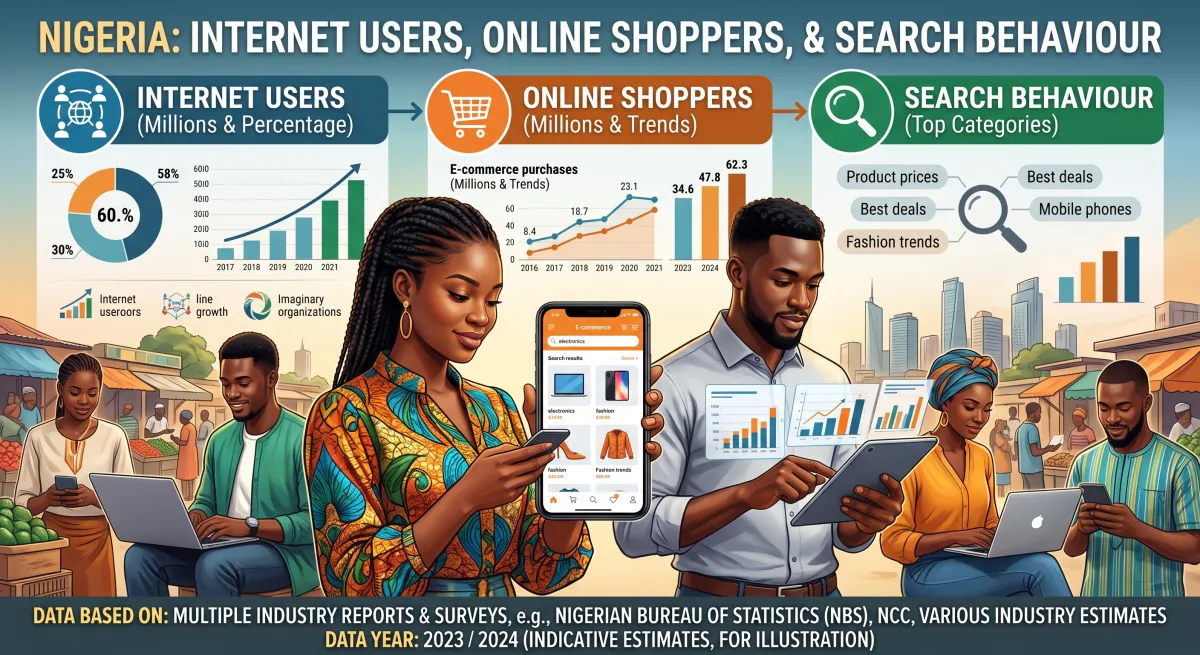
Searchers typed exactly what they want. "Affordable fridge Abuja." "Ankara bag wholesale." They have money and they have intent. They just need someone to be there when they look.
Most small sellers fight over scrollers. Almost none build for searchers. That gap is where your next customers are.
You're building on rented land
When your whole business lives on one social platform, you don't own your audience. An algorithm does. It decides who sees your posts, and it can change the rules overnight. No warning. No appeal. One update and your reach can drop while your effort stays exactly the same.
Good sellers keep social media. They just stop making it the only place they exist.
Where the money is actually sitting
Search. People typing what they want into Google and marketplace search bars, ready to buy.
Places built for buying. Someone opening a marketplace came to spend, not to be entertained.
Business buyers. Shop owners and resellers who need stock repeatedly. One bulk buyer beats fifty "how much?" comments.
What do all three have in common? The buyer arrives with intent. They don't need convincing. They need finding.
The 3-step Source Audit (do it tonight)
Step 1: Trace your last 10 sales. Write down where each customer came from. If it's one platform, you have a single point of failure.
Step 2: Search like a buyer. Google your product using the words a customer would type. Who shows up? What do they have that you don't? Usually it's clear titles, visible prices, and real photos.
Step 3: Build one asset you own. Pick your ten best products. Give each a clear name, an honest price, and real photos. Put them somewhere a stranger can find and buy from without messaging you first.
You don't have to quit social media. Keep it as your megaphone. But your shop belongs somewhere people can find it when they're ready to spend.
The bottom line
The sellers who win over the next few years won't be the ones who post the most. They'll be the ones who get found by people who are already looking to buy.
Do the audit tonight. Then tell us: where did your last sale come from? Drop it in the comments, and forward this to a seller who needs to see it.
Tomorrow: what your buyers are really thinking when they see "DM for price." You won't want to miss it.







comments (0)
Leave a Comment