 Phones and Accessories
 Computers and Accessories
 Men Clothing & Fashion
 Women Clothing and Fashion
 Home Improvement & Tools
 Jewelry & Accessories
 Health and Beauty
 Skincare
 Photochromic Glasses (Lens)
 Smart watch
 Food and Groceries
 Animals & Pet Supplies
 Apparel & Accessories
 Arts & Entertainment
 Baby & Toddler
 Business & Industrial
 Cameras & Optics
 Electronics
 Food, Beverages & Tobacco
 Furniture
 Hardware
 Health & Beauty
 Home & Garden
 Luggage & Bags
 Mature
 Media
Media Office Supplies
 Religious & Ceremonial
 Software
 Sporting Goods
 Toys & Games
 Vehicles & Parts
Stop Hiding the Price: 5 Reasons Why Gated Pricing is Killing Your Nigerian Online Store
Table of Contents
The Frustration of the Hidden Price Tag 1. The 'DM for Price' Trauma 2. Data is Currency in Nigeria 3. The Trust Deficit and the Need for Verification 4. Logistics and Total Cost Anxiety 5. SEO and the Power of Comparison How to Fix Your Conversion Rates Conclusion Editor's Choice: Transparency in Action

The Frustration of the Hidden Price Tag
Imagine this: You are scrolling through your feed after a long day of work in Lagos. You see an ad for a stunning wristwatch. You click the link, ready to buy, only to be met with a giant pop-up: 'Please Sign Up to View Price.' In that moment, what do you do? If you are like 90% of Nigerian shoppers, you hit the 'back' button immediately. The tab is closed, the brand is forgotten, and a potential sale is lost forever.
In the global e-commerce world, 'gated pricing' is sometimes used as a strategy for B2B lead generation. But in the Nigerian market, this tactic is not just annoying—it is a conversion killer. Nigerian customers value three things above all else: transparency, speed, and trust. When you hide your prices behind a registration wall, you are effectively telling your customer that you don't trust them, or worse, that you have something to hide.
1. The 'DM for Price' Trauma
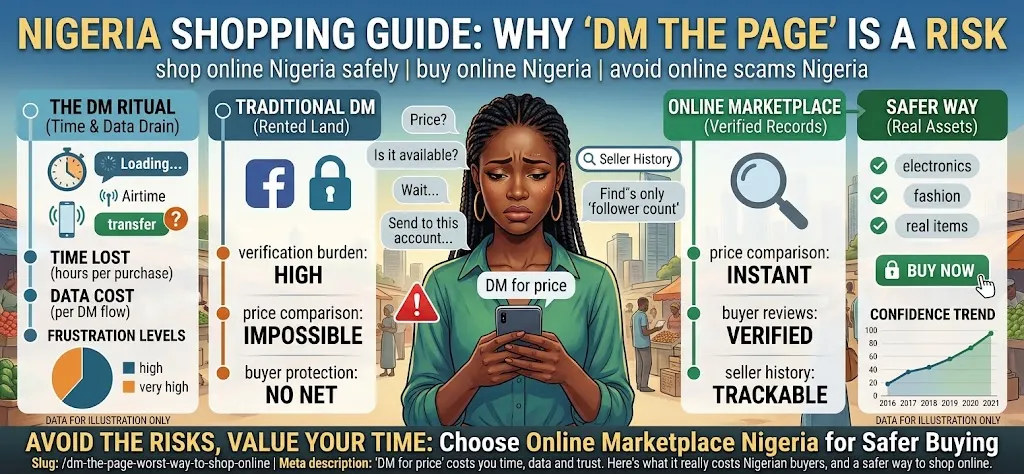
Nigerian consumers are currently suffering from what experts call 'DM for Price' fatigue. We have all dealt with Instagram vendors who refuse to post prices, forcing you to comment 'Price?' only to be told to 'Check your DM.' This lack of transparency feels like a relic of an old, inefficient way of doing business. When a professional website mirrors this behavior by gating prices, it triggers the same skepticism.
Nigerian shoppers often suspect that hidden prices mean price discrimination. There is a deep-seated fear that the price might change based on the customer’s perceived wealth or location. By being transparent, you immediately separate yourself from the 'hustler' mentality and position your brand as a professional entity like those found on Kanemtrade, where verification and transparency are the gold standards.
2. Data is Currency in Nigeria
We cannot talk about Nigerian e-commerce without talking about the cost of data. Unlike in some Western markets where unlimited high-speed internet is a given, many Nigerians are conscious of every megabyte they spend. Asking a user to spend their precious data filling out a multi-step registration form just to see if they can afford a product is a massive 'ask.'
If a customer spends 5MB of data to sign up, only to find out that the product is three times their budget, they feel cheated. This creates a negative brand association. You want your website to be a place of ease, not a place where users feel their resources are being wasted.
Editor's Choice: Transparency in Action
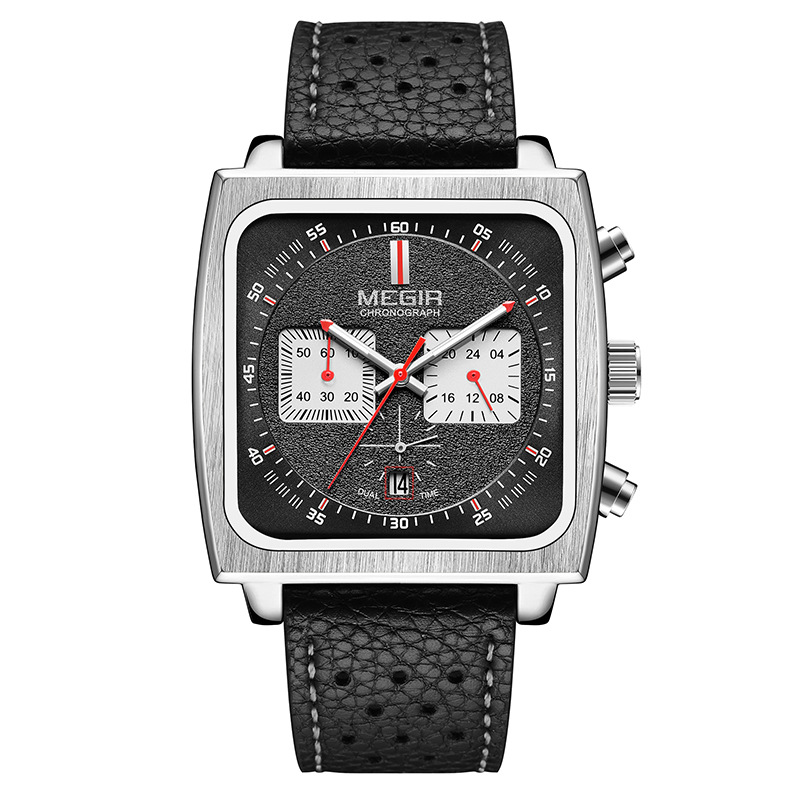
Product Spotlight: At Kanemtrade, we believe in showing value upfront. Take, for example, the MEGIR 2182 Blue Black Square Dial Men's Casual Leather Strap Date Waterproof Night Light Retro Design Men's Quartz Clock reloj. This timepiece combines retro aesthetics with modern reliability. Whether you are heading to a board meeting or a casual weekend out, its waterproof build and luminous hands make it a versatile companion. Best of all? You never have to guess the price of quality when shopping with verified vendors.
3. The Trust Deficit and the Need for Verification
Trust is the most expensive commodity in Nigerian business. With the rise of 'What I ordered vs. What I got,' customers are already on high alert for scams. A gated price wall looks like a trap. It looks like a way to harvest phone numbers and email addresses for spam, or worse, a way to lock someone into a sales funnel they never agreed to join.
This is where localization and platforms like Kanemtrade become essential. By using trusted ecosystems that emphasize verification, you show the customer that your business is legitimate. In Nigeria, a 'Verified' badge often carries more weight than a fancy logo. If your website feels like a fortress rather than a storefront, you are building walls where you should be building bridges.
4. Logistics and Total Cost Anxiety
Shopping in Nigeria isn't just about the product price; it’s about the landing cost. Between the price of the item and the logistics of getting it from a warehouse in Lagos or Kano to a doorstep in Port Harcourt, there is a lot of mental math involved. When you hide the price of the item, the customer cannot even begin to calculate if the total cost fits their budget.
Nigerian shoppers are planners. They want to know: 'If the watch is 25,000 Naira and delivery to Ibadan is 3,000 Naira, I need 28,000 Naira.' If you take away the first number, the whole mental process stops. By the time they sign up and see the price, the 'buying mood' has often passed, replaced by the realization that they could have found the information faster elsewhere.
5. SEO and the Power of Comparison
Google loves transparency. When prices are gated, search engine crawlers often can't index that data, which means you miss out on 'Price of [Product] in Nigeria' search queries. Furthermore, the modern Nigerian shopper is a researcher. They have five tabs open, comparing prices across different platforms. If your tab is the only one asking for a password, it’s the first one they will close.
How to Fix Your Conversion Rates
If you currently gate your prices, here is how to pivot without losing your strategy:
- Show a 'Price From' Range: If your pricing is truly complex, show a starting price to give the customer an idea of the bracket.
- Use Guest Checkout: Let people see everything and only ask for details at the very last second of the purchase.
- Leverage Trust Seals: Use logos from Kanemtrade or local logistics partners to show that you are part of a verified network.
- Focus on UX: Make your site load fast. Ensure the price is the most visible element on the page after the product image.
Conclusion
The Nigerian e-commerce landscape is maturing rapidly. The 'Wild West' days of hiding information are over. Today’s winners are those who respect the customer’s time, data, and intelligence. By removing the 'Sign Up to View Price' wall, you aren't just revealing a number; you are revealing your brand’s commitment to honesty. In a market where trust is everything, transparency is your greatest competitive advantage.









comments (0)
Leave a Comment